



The Tariff Tightrope of 2025
The global trade environment in 2025 is defined by volatility and nowhere is this more visible than in tariffs. What was once a relatively predictable cost has become a moving target, influenced by shifting geopolitics, retaliatory measures, and fragmented supply chains.
For companies navigating this new reality, survival depends on more than short-term fixes; it requires a framework for resilience. The Descartes Tariff Survival Guide provides business leaders with practical strategies to turn uncertainty into advantage, from supplier diversification to technology-enabled agility.
Key Takeaways
- Tariff volatility is the new normal. Businesses can no longer treat tariffs as fixed costs; they must be managed as dynamic variables.
- Global trade complexity is increasing. Geopolitical shifts, fragmented supply chains, and expanding compliance requirements are creating persistent uncertainty.
- Resilient companies will lead. Businesses that act now—rather than wait—will gain a competitive edge through adaptability and strategic foresight.
- Proactive strategies deliver value. Tactics like supplier diversification, Harmonized System (HS) classification optimization, Free Trade Agreement (FTA) utilization, and tariff engineering can significantly reduce risk and cost.
- Technology is a critical enabler. Tools such as Artificial Intelligence (AI)-driven trade intelligence, automated compliance systems, and digital twins empower faster, smarter decisions.
- Inaction is the biggest risk. Organizations that delay will be forced into reactive positions, jeopardizing margins and market share.
- Opportunity lies in agility. The companies that embed resilience and agility into their trade operations will redefine global trade.
The New Complexity of Global Trade
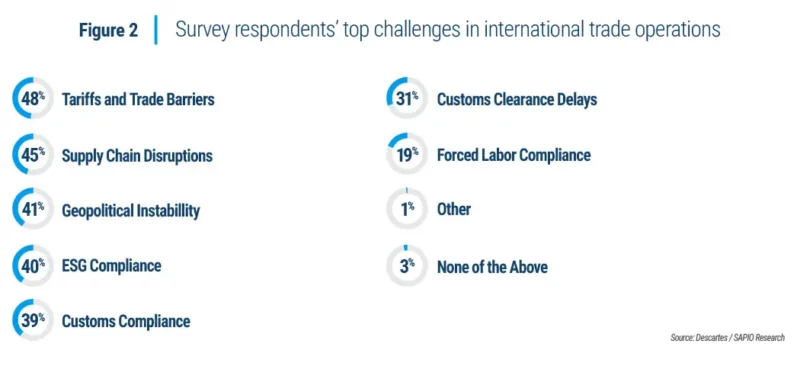
Why is tariff volatility so pronounced now? Several converging forces are reshaping the environment:
- Geopolitical realignment. Trade is increasingly wielded as a political tool. New tariffs can appear overnight, often sparking retaliatory action. The ripple effects cascade through supply chains with little warning.
- Supply chain fragmentation. Reshoring, regionalization, and climate-driven regulations have made global trade networks less predictable. Disruption in one region can quickly magnify worldwide.
- Enduring disruption. Nearly two-thirds of executives surveyed expect large-scale trade disruptions to remain a regular feature of international business. In other words, volatility isn’t a short-term problem.
- Expanding compliance expectations. From labor laws to Environmental, Social, and Governance (ESG) mandates, the cost of non-compliance is rising. Tariffs are only one piece of a broader and more demanding regulatory puzzle.
Together, these factors make unpredictability higher than ever. But while the risks are real, they also create an opening for forward-thinking companies: those that can adapt with speed and intelligence will not just withstand volatility, they’ll turn it into a competitive edge.
From Challenge to Competitive Advantage
So how do businesses move from being at the mercy of tariff changes to actively shaping their own outcomes? The answer lies in adopting strategies that convert uncertainty into opportunity.
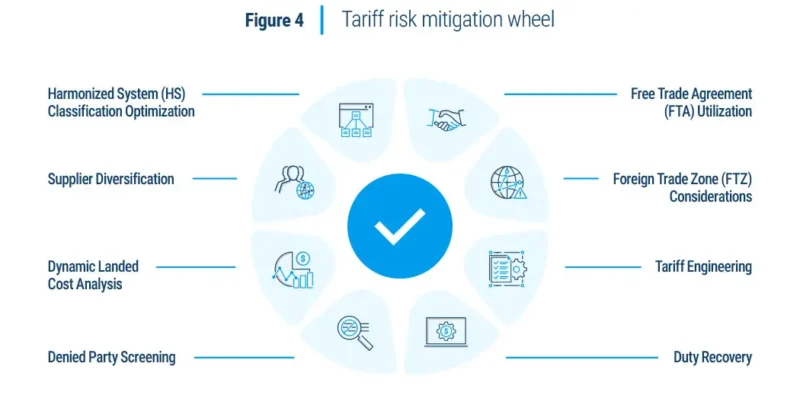
Key strategies include:
- Supplier diversification. Reducing overdependence on any single region lowers exposure to sudden tariff hikes. Advanced trade intelligence helps leaders identify alternative markets before competitors do.
- HS classification optimization. Accurate product classification can significantly reduce duty exposure. Automated tools ensure precision and help uncover overlooked savings opportunities.
- FTA utilization. Bilateral and multilateral agreements are more than paperwork—they’re powerful levers for cost control. Companies that actively leverage FTAs turn regulation into advantage.
- Foreign Trade Zones (FTZs). By storing goods duty-free and releasing them strategically, businesses gain control over both cash flow and tariff risk.
- Tariff engineering. Small but strategic design or manufacturing shifts can qualify products for lower duties, unlocking lasting financial benefits.
- Strengthened compliance. Centralized governance, continuous staff training, and selective outsourcing to technology providers ensure businesses remain both agile and protected.
- Technology-driven agility. From AI-based supplier discovery to digital twin modeling that forecasts policy impacts, technology enables organizations to pivot quickly and confidently.
Each of these strategies is powerful on their own, but together, they form a blueprint for resilience that transforms disruption into opportunity.
Why Now Is the Moment for Action
The instinct in times of volatility is often to wait and see how the landscape settles. But in today’s environment, waiting is the greatest risk. Tariff volatility isn’t abating; it’s accelerating.
Business leaders who invest in visibility, compliance, and technology will be better positioned not only to manage costs but to outpace less prepared competitors. Those who hesitate risk being locked into reactive strategies that erode margins and weaken market share.
If your organization hasn’t yet conducted a tariff impact assessment or explored supplier diversification strategies, now is the time to begin. Even small steps can make a significant difference in your readiness for the next policy shift.
Looking Forward: The Opportunity Within Chaos
Tariff volatility may feel like a challenge, but it’s also an opportunity. Organizations that embed resilience into their supply chains and embrace technology as a strategic enabler will emerge stronger. They won’t just navigate change—they’ll help shape it.
The future of global trade belongs to the businesses that view tariffs not as barriers, but as dynamic forces to be managed with intelligence, agility, and foresight.
The time to act is now. Start by evaluating your exposure, exploring where FTAs or foreign trade zones could provide relief, and investing in the tools that deliver real-time insights. And if you’re looking for a trusted partner to help chart the path forward, our team is here to guide you.
How Descartes Can Help
Descartes CustomsInfo™ Reference helps businesses reduce risk and make smarter sourcing decisions with Harmonized Tarriff Schedule (HTS) classification and landed cost calculation. The solution provides access to a global trade database of tariff and tax rules across 190+ countries, enabling accurate HS/HTS code classification and real-time analysis of landed costs.
Descartes Datamyne™ provides visibility into global trade flows, making it easier for companies to diversify suppliers and strengthen sourcing strategies in a tariff-heavy environment. With its comprehensive database of import and export transactions, Descartes Datamyne enables businesses to identify alternative suppliers, evaluate sourcing opportunities in new markets, and track competitor activity. This intelligence helps mitigate tariff exposure, reduce dependency on single-source regions, and build more resilient supply chains.
Whether you’re evaluating alternative sourcing options to shift away from tariff-heavy regions or reassessing total landed costs to improve margin resilience, Descartes empowers your team to make faster, smarter decisions. Its single-screen interface supports deep HTS code lookup, enabling better classification accuracy, optimized duty spend, and audit-ready documentation.
Descartes helps turn trade volatility into a competitive advantage—reducing costs, improving compliance, and enabling operational agility in a turbulent global landscape.
To see how Descartes can support your trade strategy, get in touch with our team today to learn more or schedule a demo.