



Identify U.S. Importers
Access the World’s Largest
U.S. Import Database
Descartes Datamyne delivers daily-refreshed U.S. import records at the bill of lading level, enabling businesses to track competitors, uncover new suppliers and buyers, and analyze global supply chain trends.











Identify Opportunities in Global Trade from U.S. Import Data


Reveal Trade Connections
Drill down from country, port, and Harmonized System (HS) code summaries to company names, addresses, and verified contact details.

Competitor Benchmarking and Trend Analysis
Benchmark against competitors by analyzing historical and real-time U.S. import shipment trends.
What is U.S. Import Data?
U.S. import data refers to shipment-level records collected by U.S. Customs and Border Protection (CBP). These records, often at the bill-of-lading level, detail the who, what, where, and when of international shipments entering the United States.

How Businesses Use Import Data
- Supply Chain Risk Monitoring
- Competitor Intelligence
- Supplier & Buyer Discovery
- Market Entry Analysis
- Compliance & Due Diligence

Data Coverage & Refresh Rates
- 190+ countries with 250+ markets
- Import data covering 5 continents
- Daily updates with 24-hour data refresh
- More than 15 years of historical data
Unlock the Power of U.S. Import Data—Watch the Quick Video
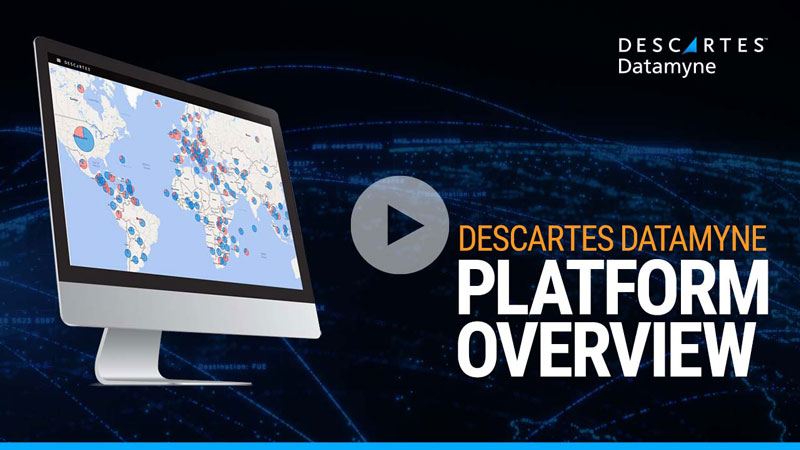
See Descartes Datamyne in Action
“The data on U.S. shipments is both comprehensive and timely, and we can react upon research results quickly. With so much competition, you must be fast. It’s difficult to imagine how we could have competed as effectively over the years without having quick access to such information.”
Rob McInnes
Manager of Business Development, Port of Halifax

Backed By Users. Built for Results.



Request a Demo
FAQs
1. What is U.S. import data and how is it collected?
U.S. import data refers to shipment-level trade records collected by U.S. Customs and Border Protection (CBP). These records, captured at the bill-of-lading level, detail the importer and exporter, commodity descriptions, ports of entry, shipment volumes, and other key supply chain information. Descartes Datamyne compiles, processes, and enhances U.S. import data, helping businesses uncover valuable trade insights.
2. How often is your U.S. import database updated?
U.S. import data in Descartes Datamyne is refreshed daily. Maritime import records are typically available within 24 hours of receipt from CBP, ensuring that your team has access to the most up-to-date U.S. shipment information available in the market.
3. What information is included in U.S. import records?
U.S. import data records in Descartes Datamyne include:
a. Importer and exporter names
b. Commodity details and HS codes
c. Port of lading and unlading
d. Shipment volumes and weights
e. Transport details (e.g., carrier, vessel)
f. In some cases, company addresses and verified contact information
This level of detail provides a clear view of the who, what, where, and when of U.S. imports.
4. Can I identify buyers and suppliers using U.S. import data?
Yes. With Descartes Datamyne, you can drill down to the company level to identify suppliers, buyers, and potential sales leads. The database not only reveals trade relationships but often provides verified contact details, making it easier to connect with decision-makers.
5. How far back does your U.S. import data go?
Descartes Datamyne offers over 15 years of historical U.S. import data, enabling you to analyze long-term trade patterns, monitor shifts in supply chains, and compare past and present market dynamics.
6. What industries use U.S. import data?
A wide range of industries leverage our import database, including:
a. Logistics and transportation providers
b. Manufacturers and distributors
c. Retailers and wholesalers
d. Law firms and trade investigators
e. Government agencies and regulators
f. Banks and financial institutions
From supply chain optimization to compliance monitoring, U.S. import data supports multiple use cases.
7. What makes Descartes Datamyne different from other U.S. import data providers?
Unlike other providers, Descartes Datamyne delivers:
- Daily data refreshes with shipment-level accuracy
- Coverage across 190+ countries
- A user-friendly, web-based platform with interactive dashboards and analytics
- Access to company names, trade partners, and contact details
- Backing by ISO 9001, certification that guarantees data excellence, and Descartes, a global leader in logistics technology
This combination ensures you get the most accurate, comprehensive, and actionable U.S. import data available.
8. Can I analyze U.S. import data by port, state, or country of origin?
Yes. Our platform lets you create summaries and trend analyses by port, city, state, county, and country of origin. You can filter results to uncover top trading partners, shipment volumes, and trade flows — supported by interactive maps, custom reports, and dashboards.
9. How can U.S. import data help my business grow?
By using U.S. import data, your business can:
a. Monitor competitors and track their sourcing strategies
b. Discover new suppliers and buyers for lead generation
c. Strengthen supply chain resilience by diversifying partners
d. Identify market opportunities through shipment trend analysis
e. Ensure compliance with trade regulations and due diligence requirements
10. Do you offer a free trial or demo of the U.S. import database?
Yes. You can request a free demo of Descartes Datamyne’s U.S. import data platform to see how it works for your business. A trial provides hands-on access to our import database, allowing you to explore shipment records, test search features, and evaluate how our solution can support your trade intelligence needs.

Gain a Competitive Edge with the Descartes Datamyne U.S. Import Data
Access the most complete, up-to-date U.S. import data from a single, integrated web-based import database. Research markets, track competitors, and uncover new suppliers or buyers — right down to company names and contact details — to drive smarter trade decisions.
Global Trade Data